
Influencer marketing has become one of the most powerful growth levers for modern D2C brands—but only when done strategically.
If you’re simply chasing follower counts or sending out one-size-fits-all outreach messages, it’s time to rethink your approach. Here’s a practical breakdown of how to build influencer campaigns that are aligned, impactful, and ROI-driven:
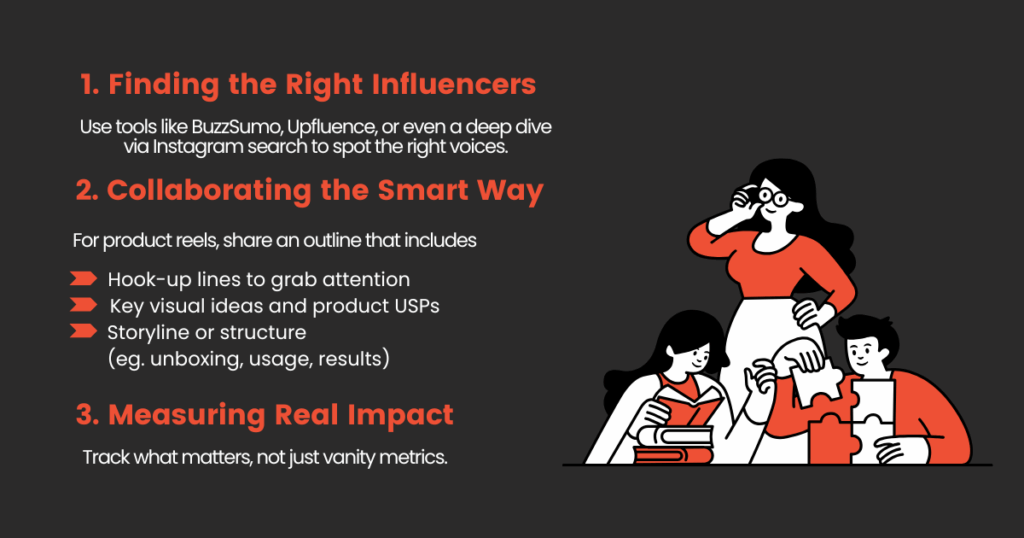
1. Finding the Right Influencers
Not every creator is a fit for your brand. Instead of being dazzled by vanity metrics, focus on finding influencers who truly resonate with your brand values and audience.
What to look for:
Audience relevance to your niche
Authenticity in content and communication
Strong engagement (comments, shares, saves—not just likes)
Use tools like BuzzSumo, Upfluence, or even manual research via Instagram, TikTok, or YouTube to find the right voices that drive results.
2. Collaborating the Smart Way
Once you’ve shortlisted the right creators, focus on how you collaborate. A thoughtful approach goes a long way in building long-term relationships and meaningful campaigns.
Tips for better collaboration:
Personalise your pitch—mention what you like about their content
Explain how your product fits into their audience’s lifestyle
Clearly communicate expectations around deliverables, deadlines, and tone
3. Measuring Real Impact
To understand what’s working, move beyond surface-level metrics and start measuring outcomes that align with your marketing goals.
What to track:
Engagement – saves, shares, and comments over passive likes
Website Traffic – use UTM parameters to track influencer-driven visits
Conversions – create influencer-specific discount codes or affiliate links
This data helps you evaluate ROI, optimise future campaigns, and scale what works.
🎥 Add Structure for Better Product Reels
To support creators in delivering content that performs well and stays on-brand, provide a basic structure for product-related reels or videos. This ensures consistency while giving influencers creative flexibility.
What to include:
Hook lines or intro prompts
Visual references or moodboards
Key product USPs and talking points
CTA suggestions (swipe-up, link in bio, discount code)
A clear yet flexible outline empowers creators to produce engaging, authentic content that aligns with your brand narrative.
Final Thoughts
Influencer marketing is more than just a trend—it’s a long-term strategy for building trust, community, and conversions. When approached with thought and structure, it becomes a growth engine that drives measurable results.
If your D2C brand is looking to scale influence, increase reach, and connect with consumers more meaningfully, it’s time to rethink how you do collaborations.
💬 I’d love to hear from brands experimenting with influencer marketing. What’s working for you—and what isn’t?